Cozy Living
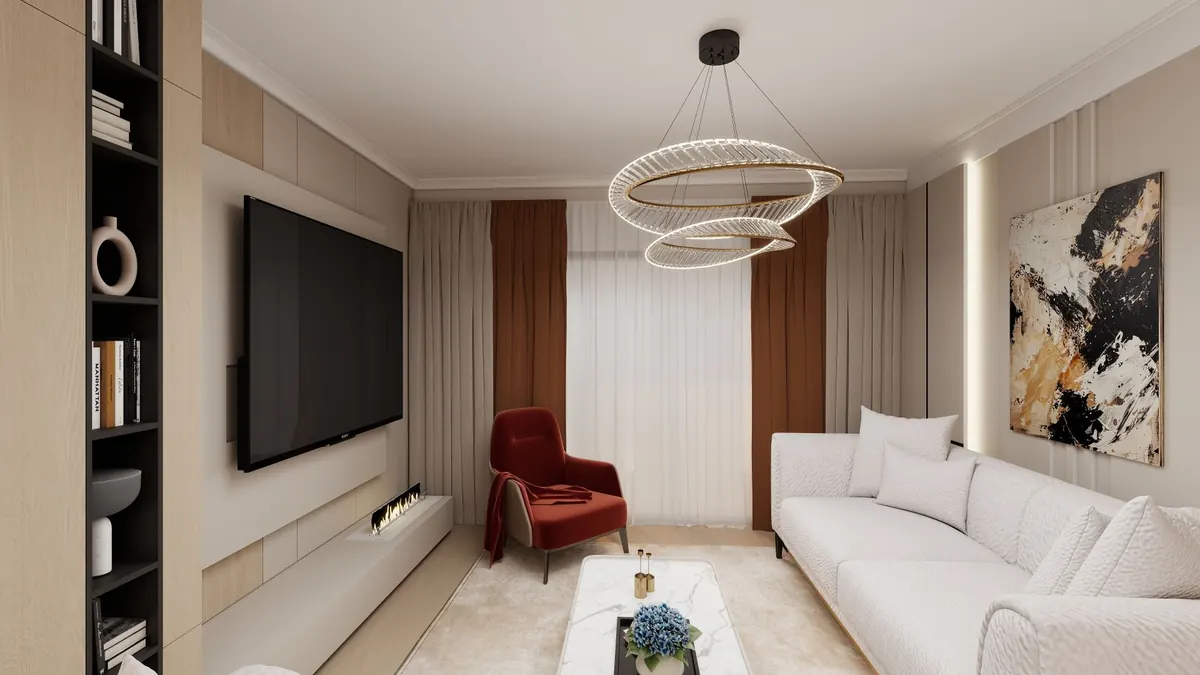
How to Style a Small Living Room for Cosy UK Evenings: 7 Layout Ideas That Work
There is a particular kind of evening in a small British living room. The curtains are closed by five, the kettle is on, and the sofa sits close enough to the radiator that you can reach your tea without standing up. Compact lounges get a bad press, but they are actually the easiest rooms in a house to make genuinely cosy. What they need isn't more stuff or a wall of white paint. It's a few deliberate decisions about where things sit, how the light falls, and what you can touch from the seat you use most.
Layout Ideas That Make a Compact Lounge Feel Bigger
1. Pull the sofa away from the wall
The instinct is to push everything flat against the walls to free up floor. In practice this makes a small room feel like a waiting area: all lined up, nothing grouped. Pull the main sofa 10–15cm off the wall, or further if you have the space, and the room immediately reads as deeper. You gain room for a slim console, a floor lamp or a basket of blankets, and you break that boxed-in feeling that comes from sitting with your back to the skirting board. Leave a walkway of roughly 60–70cm between the sofa and whatever faces it; below that, the room starts to feel like a corridor.
2. Give one thing the best wall
Choose the fireplace, a window with a decent view, or the television. One, not three. Then angle the seating towards it, even by ten degrees, so the room has a direction. A common mistake in compact lounges is arranging chairs in a perfect ring around the coffee table, which leaves everyone staring at each other's knees. If the TV has to dominate, mount it on the longest wall you have and let the sofa face it — a screen squeezed into a corner forces half the room to sit awkwardly.
3. Zone with a rug, not with furniture
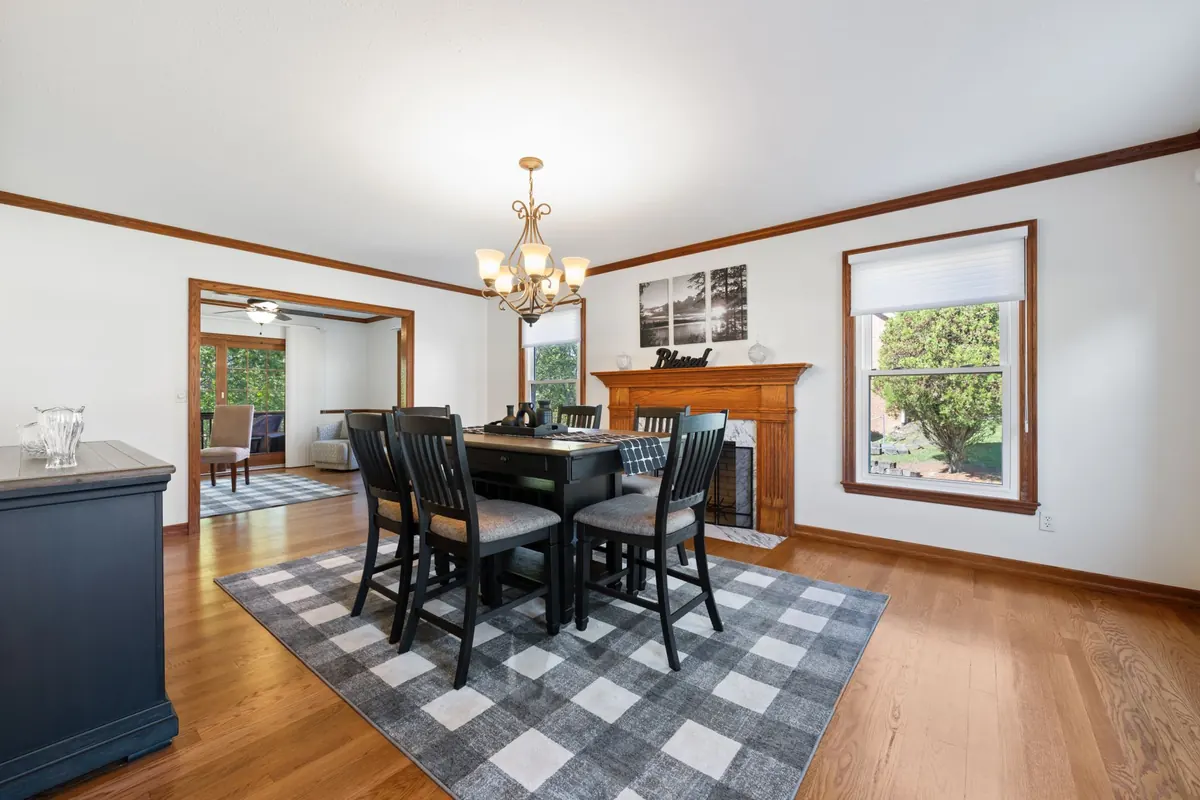
Rugs work harder in small rooms than in large ones. Choose one big enough that at least the front legs of every main seat sit on it; too small a rug chops the floor up and makes the seating look scattered. In an awkward or narrow room, a round rug softens hard corners and makes a tight layout look intentional. Layering a thinner patterned rug over a neutral carpet in a warm, low-contrast colour also makes the floor plane feel larger rather than busier.
Before you commit to a layout, walk it. Trace the route from the door to your usual seat, then from that seat to the window, the light switch and the radiator control.
- Can two people pass between the sofa and the door without turning sideways?
- Does the door open fully without catching an armchair?
- Is there somewhere to put a cup down within reach of every seat?
- Can you see the television, the fireplace or the window from where you actually sit?
If any answer is no, move the furniture rather than buying something new.
Lighting That Makes Eight O'Clock Feel Warm
4. Layer light at three heights
One overhead light is the quickest way to make a small room feel cold, flat and faintly like an office. Aim for three sources at three levels: a table lamp at seated height, a floor lamp or wall light standing taller, and something low — a small lamp on a shelf, a candle, a little glass jar of warm fairy lights on the windowsill. Switch them on together and the ceiling drops out of the picture, which is exactly what you want in a low room.
5. Change the bulbs before you change the lampshade
Bulb colour matters more than fitting. Look for warm white, around 2700K, rather than the cooler daylight bulbs sold for kitchens and studies. Warm light flatters wood, wool and skin, and makes a small room feel softer after dark. If you can swap a switch for a dimmer, do it on the main light and keep it low in the evening. Fabric shades in linen, linen-blend or pleated paper diffuse light gently; bare bulbs and shiny metallic shades bounce it about and make tight spaces feel harsh.
Textiles: The Layer That Does the Cosying
6. Hang curtains properly
Curtains should be wider than the window — around one and a half to two times the window width — and long enough to reach the floor or just kiss it. Fit the pole or track close to the ceiling and extend it 15–20cm past each side of the frame. The window looks bigger, the ceiling looks higher, and the proportions of the whole room improve. A thermal or interlined lining keeps heat in and street noise out, which matters more in a compact lounge where you sit near the glass. If a radiator sits under the window, keep the fabric clear of it so warmth can circulate.
7. Build texture in odd numbers
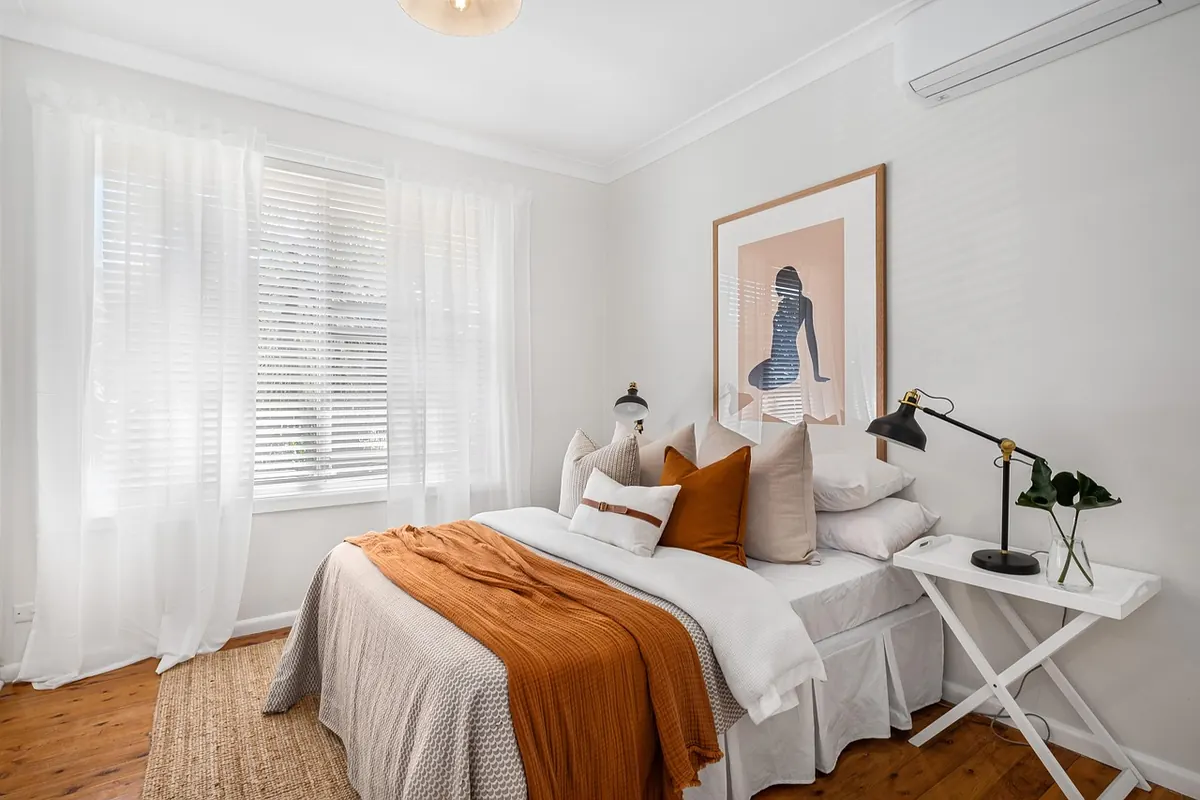
Cosiness is mostly texture. Mix at least three surfaces within reach of your usual seat: something chunky, such as a wool or knitted throw; something smooth, such as velvet or cotton cushions; and something grainy, such as a jute basket, a wooden tray or a linen shade. Cushions usually look best in odd numbers and mixed sizes — a pair at 45cm with a smaller patterned one in front. Don't overfill a small sofa: two or three cushions plus one throw you can genuinely reach is plenty. A sheepskin over a hard dining chair, a runner along a console or a quilted throw over an arm adds warmth without taking up any floor space.
The Five-Minute Evening Reset
Cosy is a habit as much as a look. Before guests arrive, or when you settle down for the night, run through this:
- Turn off the ceiling light and switch on two lamps in opposite corners. This alone changes the room.
- Plump the cushions and fold throws back over the arm of the chair.
- Clear the coffee table down to a tray, a candle and whatever you're reading or watching.
- Close the curtains and check for draughts around the frame. A door snake or a rolled blanket at the foot of a door makes a real difference in winter.
- Put something soft on — the radio, a record, a series you've seen before.
If you burn candles, keep them well away from curtains, throws and anything loose, and never leave them burning when you leave the room.
None of this needs a bigger room. A pull of the sofa, a second lamp, a rug that reaches under your feet — compact lounges respond quickly to small changes. That is the quiet advantage of living in one.
Photo: shaza jocarlos / Pexels
Related Articles